

News Detail
Akyaka in The Guardian: A rare coastal town resisting mass tourism
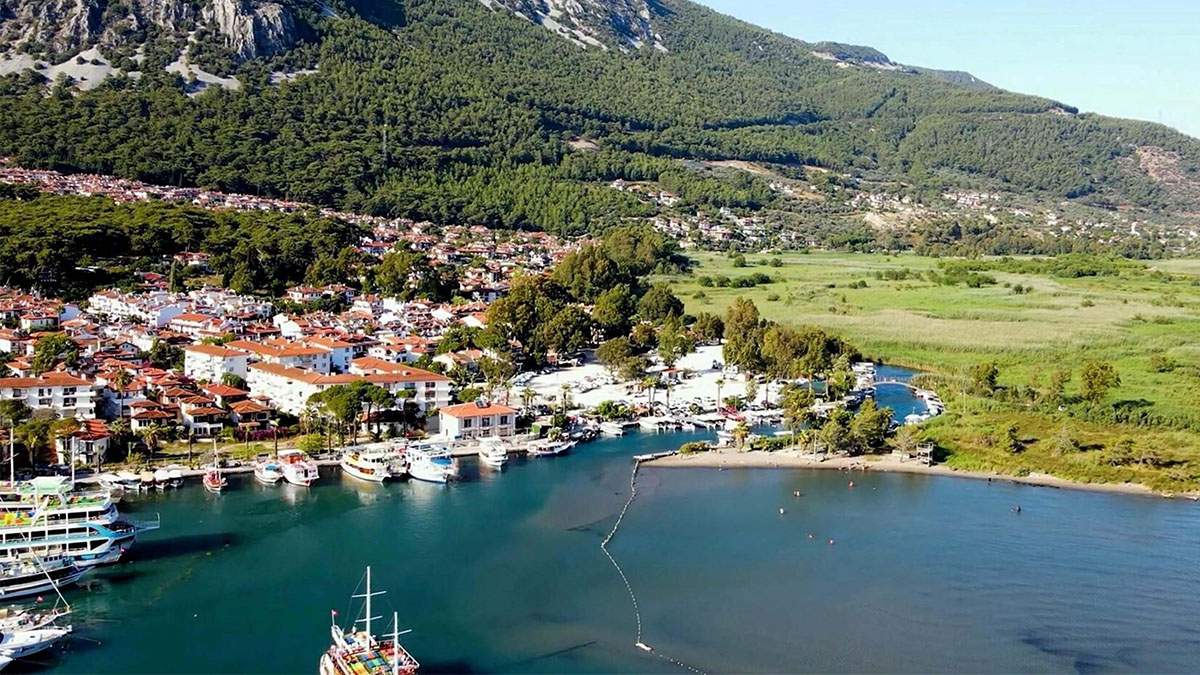
Akyaka, a neighborhood in Muğla with the
world-renowned title of “Slow City,” has once again made global headlines with
an article published in the British newspaper The Guardian. Guardian writer
Annabelle Thorpe described Akyaka as one of the rare coastal towns resisting
mass tourism.
The Akyaka neighborhood of Muğla's Ula district,
declared a ‘Slow City’ in June 2011 by the Cittaslow International Coordination
Committee, attracts visitors in every season. In particular, the Kadın Azmağı
stream, which flows through trees and reeds right next to Akyaka into the
Gökova Bay, creates a natural aquarium-like scene. The coolness of the 1,200-meter-long
stream, its underwater vegetation, fish that seem close enough to touch, and
ducks gliding on the water offer a visual feast.
“Wow. Experience its beauty”
NASA shared a photo of Kadın Azmağı on its Instagram
account on April 22, 2021, World Earth Day, with the caption "Wow.
Experience its beauty' on Earth Day, April 22, 2021. Akyaka, Muğla's
world-famous ‘Slow City’ neighborhood, where Kadın Azmağı is located, was also
listed among the world's leading destinations in the ‘Best Tourism Villages’
initiative organized by the UN World Tourism Organization, thanks to its
natural and cultural heritage and sustainable tourism approach. Akyaka
Neighborhood was once again brought to the world's attention with an article
published in the British newspaper The Guardian.
“This is Exactly Where I Want to Be”
In her column in The Guardian, writer Annabelle Thorpe
described Akyaka as one of the rare coastal towns that has resisted mass
tourism thanks to its unpretentious nature, slow pace of life, and strong
connection to nature. Thorpe emphasized that Akyaka still offers a genuine
vacation experience, summarizing the spirit of the town with a moment from her
recent visit: the sight of beach chairs being gathered at sunset, restaurants
preparing for evening service, and three Turkish women knitting on the shore,
which she described as “this is exactly where I want to be.” Thorpe noted that
Akyaka, located at the eastern end of the Gökova Bay, was not a new discovery for
him, having first encountered the town about 30 years ago while working as a
holiday representative. He stated that Akyaka's greatest privilege was that it
had remained largely unchanged over the years.
Houses Decorated with Begonias: The Symbol
of Akyaka
In his article, Thorpe wrote that despite new
residences, small hotels, and expanded beaches, Akyaka still has a slow,
somewhat makeshift but extremely authentic spirit, noting that this is closely
related to the town's inclusion in the ‘Slow City’ network. Thorpe wrote that
Turkish poet and architect Nail Çakırhan holds an important place in Akyaka's
architectural identity, that Çakırhan's approach of blending traditional
Ottoman architecture with local materials in the 1970s remains influential
today, and that houses with wooden balconies and begonia-adorned facades have
become the symbol of Akyaka.
A Peaceful Vacation Experience
Thorpe reported that the absence of large,
all-inclusive hotels in Akyaka plays an important role in preserving local
life, with visitors spending time at fish restaurants along the Azmak River,
hiking on forest trails, and enjoying a peaceful vacation experience on the
beach. Akçapınar Beach also featured prominently in Thorpe's article. It was
noted that thanks to the winds that blow between May and November, the region
has become one of Turkey's important centers for kite surfing and wingfoiling.
It was emphasized that the shallow and sandy structure is ideal for beginners.