

DRV calls for swift implementation of the national tourism strategy and competitive framework conditions.
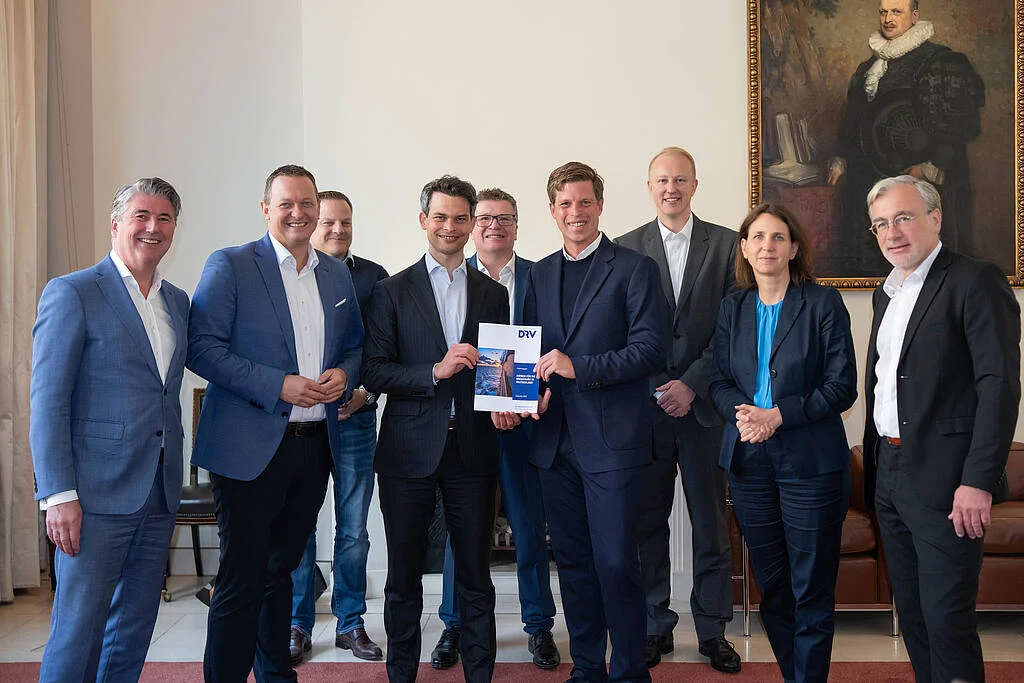
The German Travel Association (DRV) has published a position paper on strengthening Germany as a cruise destination and presented it to Christoph Ploß, the Federal Government’s Coordinator for the Maritime Economy and Tourism. The presentation took place today in Berlin during a meeting at the Hamburg State Representation, attended by numerous executives from the major cruise lines operating in the market. In its position paper, the association highlights the significant economic importance of ocean and river cruises for Germany as a tourism destination. Last year, Germans spent a total of approximately 6.7 billion euros on ocean and river cruises—an increase of eight percent. This means that cruises continue to be a growth engine for the German travel industry.
“The National Tourism Strategy explicitly highlights the need for modern, sustainable, and efficient ports and their connectivity as a key foundation for economic success, the successful implementation of national energy and climate goals, and general prosperity in Germany. It is now crucial to implement these measures swiftly and consistently,” emphasizes Felix Eichhorn, President of AIDA Cruises and Vice President of the DRV.
“Germany has excellent conditions as a cruise destination,” adds Benjamin Krumpen, Managing Director of Phoenix Reisen and Chair of the DRV’s Cruise Committee. “However, in order to remain competitive on the international stage, infrastructure, political framework conditions, and administrative processes must keep pace with market developments. Swift political action is essential here.”
The extremely low water levels in the summer of 2026 clearly demonstrate how vulnerable river cruises are to extreme water levels and infrastructure bottlenecks. Significant restrictions occurred on the Rhine, Moselle, and Danube. Itineraries had to be rerouted, embarkation and disembarkation points relocated, ships changed, or sections of the route replaced with additional bus transfers. The usability of mooring sites and the safe embarkation and disembarkation of guests are also increasingly compromised during periods of extreme water levels.
Against this backdrop, the further dialogues and measures announced by Federal Minister of Transport Steffen Bilger must also take into account the specific needs of river cruises. Beyond immediate crisis management, federal waterways must become more resilient to low water levels in the long term. In particular, there is a need for the accelerated implementation of low-water measures on the Middle Rhine, reliable water level forecasts and Europe-wide information services, as well as long-term, secure funding for the maintenance, modernization, and expansion of waterways.
The DRV emphasizes that the cruise industry contributes significantly to Germany’s economic value creation, employment, and international visibility. In light of a rapidly growing international market, numerous opportunities are opening up for German ports.
With regard to the federal government’s National Tourism Strategy, the travel industry expressly welcomes the goals set for strengthening competitiveness, expanding infrastructure, and reducing bureaucratic hurdles.
The DRV position paper outlines specific areas for action, including improving transportation links to ports, increasing investment in infrastructure—particularly for river cruises—streamlining approval processes, and implementing measures to promote sustainable technologies and climate-friendly fuels. These factors are increasingly influencing the location decisions of international cruise lines and the appeal of destinations for guests.
It also emphasizes the importance of reliable and internationally coordinated framework conditions. Only through close integration of national, European, and international regulations can a competitive environment be ensured for the globally active cruise industry.
The industry calls on the federal government to promptly address the identified measures and implement them in collaboration with the private sector and the states.