
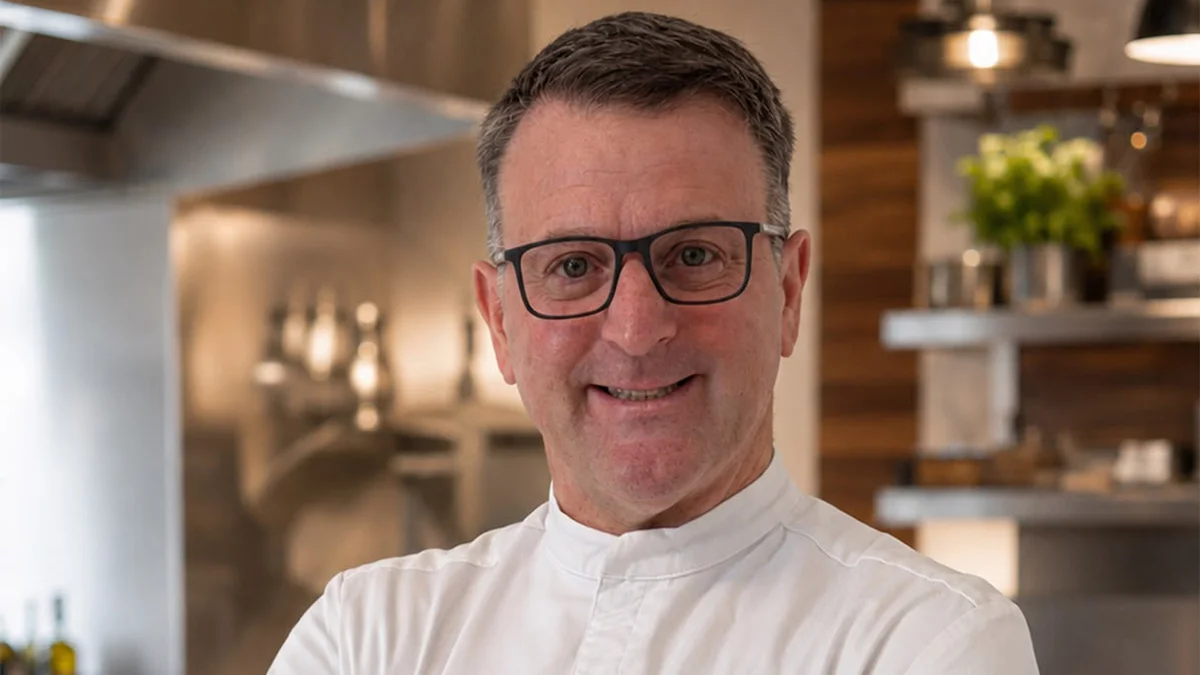
Chef Daniele Chiari, whose culinary journey began with simple curiosity and continues today as Culinary Director at the Royal Protocol Hospitality and Catering Department of Saudi Arabia, says that despite all the years he has spent in the kitchen, “curiosity” remains his strongest motivation.
Here is the Exclusive Interview with Chef Daniele Chiari, Culinary Director at the Royal Protocol Hospitality and Catering Department of Saudi Arabia:
Can you tell us about your culinary journey and what inspired you to become a chef?
My culinary journey began with a simple fascination for food and for the emotions that can be created around a table. Growing up in Italy, food was never just something we ate; it was part of our culture, our family, our traditions, and the way we connected with one another. That environment naturally developed my curiosity and respect for ingredients and cooking.
As I entered professional kitchens, I quickly understood that becoming a chef requires much more than passion. It demands discipline, sacrifice, consistency, humility, and a willingness to keep learning every day. Throughout my career, I have had the opportunity to work with different people, cultures, concepts, and styles of hospitality, and each experience has contributed to the chef and leader I am today.
What continues to inspire me is that this profession never really allows you to stop growing. There is always another ingredient to discover, another technique to understand, another culture to learn from, and another generation of chefs to develop. Even after many years in the kitchen, that curiosity is still one of the strongest motivations behind what I do.
Saudi Arabia is experiencing an extraordinary transformation in tourism and hospitality. How has this influenced your work and your vision as a chef?
Saudi Arabia is experiencing a remarkable period of transformation, and being part of the hospitality industry during this time is extremely exciting. The Kingdom is attracting international talent, developing ambitious hospitality destinations, and creating a new generation of dining experiences. For chefs, this creates both an opportunity and a responsibility to contribute something meaningful to that evolution.
Working in Saudi Arabia has encouraged me to look beyond the traditional role of a chef. Today, we are not simply creating dishes; we are creating experiences for guests who are increasingly knowledgeable, international, and curious. At the same time, it is essential to understand and respect the culture of the country in which we are working.
This environment has influenced my vision by making me even more open to collaboration, innovation, and cultural exchange. I believe there is tremendous potential to combine international culinary expertise with the identity, ingredients, hospitality, and traditions of Saudi Arabia.
For me, the most exciting part is knowing that we are contributing to a hospitality landscape that is still being written. There is an opportunity to establish new standards, develop local talent, and create dining experiences that people will associate with Saudi Arabia for many years to come.
What is your philosophy when it comes to developing, motivating, and leading multicultural kitchen teams?
My philosophy is that a successful kitchen is built around people before it is built around food. You can have the best ingredients, equipment, and concepts, but without a strong and motivated team, you cannot achieve consistency or excellence.
Leading a multicultural team requires understanding that every person brings a different background, experience, personality, and way of communicating. My responsibility as a leader is to bring those differences together around one shared vision and one professional standard.
I believe strongly in leading by example. If I expect discipline, respect, punctuality, attention to detail, and commitment from my team, I have to demonstrate those qualities myself. At the same time, leadership cannot be based only on pressure. People need to feel respected, trusted, challenged, and given opportunities to develop.
I also encourage my chefs to understand the reason behind what we do rather than simply following instructions. When people understand the purpose, they take greater ownership of their work. I want young chefs to ask questions, make suggestions, learn from mistakes, and gradually become confident enough to make decisions themselves.
Ultimately, one of my greatest satisfactions is not simply seeing a successful service; it is seeing someone who joined my kitchen grow professionally, take on more responsibility, and eventually become a leader capable of developing others. That is how you build a winning team and, more importantly, a lasting culinary culture.
How do you balance culinary innovation while preserving the authenticity of traditional recipes?
For me, innovation should never begin by trying to change tradition. It should begin by understanding it. Before you reinterpret a traditional dish, you need to understand its history, ingredients, techniques, and, most importantly, why it has survived for generations.
Coming from an Italian culinary background, I have enormous respect for simplicity and authenticity. Many of our greatest dishes are built around only a few ingredients, which means there is nowhere to hide. The quality of the ingredients, the technique, the timing, and the balance have to be right.
At the same time, cuisine cannot remain completely static. Chefs travel, cultures interact, techniques evolve, and guests' expectations change. I enjoy exploring new ideas, but innovation should have a purpose. Adding complexity simply to make a dish appear modern does not necessarily make it better.
Sometimes innovation can be found in a new technique, a lighter preparation, a different presentation, a more sustainable ingredient, or even in removing something unnecessary from a dish. The important thing is that the original identity remains recognizable.
I always ask myself: does this change improve the dish, or am I changing it simply for the sake of being different? If innovation enhances the experience while respecting the soul of the original recipe, then tradition and creativity can coexist beautifully.
If your culinary philosophy could be described in just one sentence, what would it be?
“Respect the ingredient, honor the tradition, lead with passion, and never stop evolving.”