
Having completely refurbished 100 wide-body aircraft from start to finish in 44 months, Emirates has reached a major milestone in its comprehensive modernization program. As part of the program, which involves a $5 billion investment, passengers are enjoying a more comfortable and personalized flight experience—from Premium Economy cabins to next-generation seats.
Emirates has successfully completed the modernization of its 100th aircraft as part of its comprehensive aircraft refurbishment program. Since work began in November 2022, 47 Airbus A380s and 53 Boeing 777s have been completely refurbished at the Emirates Engineering (Engineering Center) hangars in Dubai. Under the program, which involves a $5 billion investment, the refurbishment of approximately 20 more aircraft is planned by the end of December 2026. As a result, by the end of the year, Emirates will have completed more than half of its transformation program, which covers a total of 219 aircraft.
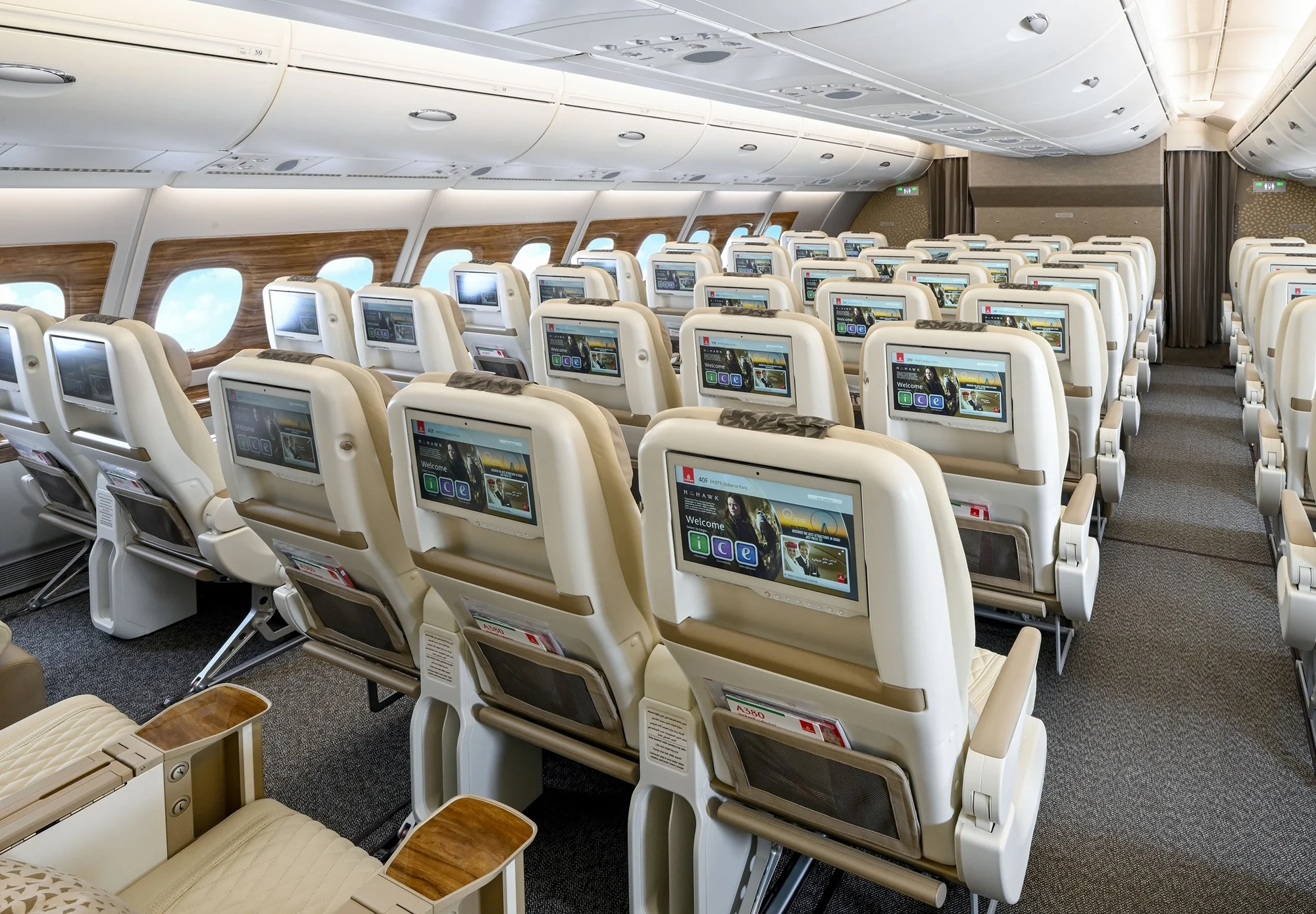
As part of the work carried out over the past 44 months, the Emirates Engineering team, with the contribution of more than 400 engineers and technicians, logged a total of 4.4 million man-hours to completely refurbish the aircraft cabins. All aircraft modernized through the refurbishment program were also equipped with Emirates’ highly popular Premium Economy cabin. To date, more than 3,800 Premium Economy seats have been added to the fleet, paving the way for this cabin class to be offered on more routes across the Emirates network.
Emirates President Sir Tim Clark commented on the matter, saying: “We are steadfastly continuing our efforts to deliver the world’s best products in every cabin class. Completing the cabin refurbishment of 100 wide-body aircraft in as little as 44 months is an extremely significant achievement for us. Thanks to our $5 billion investment, we are offering our passengers greater comfort, more luxury, and a travel experience thought out down to the finest detail in every cabin. Executing a project of this scale and complexity entirely in-house has once again demonstrated the planning, engineering, and technical expertise of our teams in Dubai.”
Since November 2022, Emirates Engineering teams have completed the refurbishment of an average of 28 aircraft per year. On each aircraft, the cabin is completely dismantled and redesigned; the entire interior is rebuilt down to the finest detail using more than 4,000 new parts for the Airbus A380 and more than 2,500 for the Boeing 777.
Emirates’ renewal program, initially announced in November 2021 to cover 105 aircraft, was expanded first to 191 and then to 219 aircraft by the end of 2024 in response to strong demand from passengers. In August 2024, the first refurbished Boeing 777 began commercial flights from Dubai, while in May 2026, the comprehensive Airbus A380 retrofit—featuring the first-ever addition of a Premium Economy cabin on the upper deck—was completed. In the next phase of the program, starting in October 2026, next-generation 4K OLED HDR10+ screens mounted on the backs of seats, Safran Z400 seats—noted for their lightweight design—and various new cabin enhancements will be gradually integrated into the fleet.
Throughout the refurbishment program, Emirates is repurposing high-quality leather, fabric, and other materials removed from the aircraft. These materials are transformed into limited-edition travel products under the “Aircrafted by Emirates” collection, while more than 4,000 backpacks made from Economy Class seat fabric have been distributed to children in 11 different countries to date.